


Finally, a Natural Hair Growth Serum for Finasteride Refusers — That’s Actually Backed by Science
I’m a researcher who spends most of my time dispelling hair loss myths and telling people which products do (and don’t) work. This is the one thing I tell the men who refuse the drug — and it’s not what either side will tell you.

Hair loss expert · Consumer advocate · Editorial board, top dermatology journal · 8 min read
Losing your hair is personal.
How you choose to fight it is personal too.
And by now you’ve probably noticed something. Everyone has an opinion about what you should put in your body.
This isn’t another one of those.
I’ve spent over a decade in hair loss research. I sit on the editorial board of a top dermatology journal. I run one of the world’s largest hair loss communities. And my particular specialty is catching the flaws in clinical trials that hide what treatments really do.
Most of my job is telling people which hair products are built on hype, not science.
As an expert in this space, one thing is undeniably true: the hair loss space is one of the scammiest corners of the internet.
Most brands are selling natural alternatives to FDA-approved treatments like finasteride.
They claim that they work just as well, if not better.
The problem? Many of the natural products out there aren’t backed by sound science.
For readers like you, marketers prey on your personal preferences to avoid finasteride. And they rely on you not knowing the science to make the sale.
So let’s set the record straight.
First, here’s the truth about finasteride
Oral finasteride works.
For most men, it’s effective and well tolerated.
Topical finasteride can be a smart step further — the same active, with far less of it reaching the rest of your body.
Source — a large randomised trial found topical finasteride matched the oral pill for hair growth while cutting the drug’s systemic (bloodstream) exposure by over 100-fold: Piraccini BM, Blume-Peytavi U, Scarci F, et al. “Efficacy and safety of topical finasteride spray solution for male androgenetic alopecia: a phase III, randomized, controlled clinical trial.” J Eur Acad Dermatol Venereol. 2022;36(2):286–294.
If either one is right for you, take it. Genuinely.
But here’s the part the internet argues past:
Some men would simply rather not use finasteride in any form.
Not out of fear. Not out of bad information.
Simply because they prefer to take the natural route.
Their body. Their hair. Their call.
And if you’re set on an all-natural approach to hair growth…
It’s my job to help get you there, using the best evidence possible…
And to hand you the most effective tools for the journey.
There’s a way to fight hair loss naturally
First, let’s talk about what that means: fighting hair loss naturally.
If we walk this path, what do we gain? And what do we give?
First, natural ingredients aren’t as well-studied as pharmaceuticals.
Fewer subjects, shorter durations, less replications, more unknowns.
This is evidence quality. And the evidence on natural ingredients is, undeniably, more limited.
That’s just reality, and anyone telling you differently is lying.
Now here’s the nuance.
“Less studied” is not “never studied.”
In fact, there are hundreds of studies on hundreds of natural ingredients.
The key is knowing how to pick the good ones from the bad.
Yes, ingredients supported by petri dish and mouse studies create the illusion of scientific support.
Marketers love to hype these.
But those ingredients rarely produce real hair gains in humans. Because mice are not men.
What you actually need to prioritize:
Ingredients tested in humans, with pattern hair loss, that went up against proven pharmaceuticals… and won.
Those ingredients do exist. They’re the ones that should be packed into a best-in-class natural hair serum.
Better evidence quality means they put you in the best position for success.
So, how can we separate fad ingredients hyped by marketers from real ingredients worthy of your time, money, and hair?
You can study the hierarchy of evidence, read thousands of papers, and become your own hair loss expert.
That’s the long path, and if you’ve got time for it — do it. It’s empowering.
In the meantime…
Seeing as I work in hair loss research, sit on the editorial board of a top dermatology journal, and spend my career evaluating evidence…
I’m simply going to do this for you.
I’ll tell you exactly what the top natural serum ingredients are: their names, concentrations, and the exact formulations you’ll want to look for.
There are 8 of them.
Finding all of them in a single hair serum is exceedingly rare. But it’s possible. And I’ll tell you the exact methods we used to uncover them.
The best natural ingredients for hair loss
It started as a year-long, PhD-led research project. The goal: read thousands of peer-reviewed papers on hair loss. Rank every treatment ever studied by its regrowth, evidence, and safety. Pressure-test every claim.
Then, identify the best-supported natural ingredients for a hair growth serum: their names, doses, formulations, & more.
Here’s each ingredient, what it does, and the evidence behind it. In my eyes, these are non-negotiables in any science-backed natural hair serum.
The ingredient science
Pattern hair loss is driven at the follicle by a hormone called DHT.
Every ingredient below goes after DHT — or the follicle itself — right where you apply it. On the scalp.
Here’s each one, and the evidence behind it.
1. Capixyl™ — the most interesting one
Capixyl is a trademarked complex: a red clover flavone paired with a signalling peptide (acetyl tetrapeptide-3).
The active that does the heavy lifting is the red clover compound, biochanin A.
Its trick is mimicry. Biochanin A is shaped enough like testosterone to slot into the very same 5-alpha reductase enzyme finasteride targets — but once it’s sitting there, it doesn’t convert into DHT. Occupy the enzyme, make less DHT.
And it does that where you apply it, on the scalp — not by lowering DHT through your whole body.
In a 24-week trial on 34 men and women, a Capixyl formula kept pace with 3% minoxidil across hair counts and photo assessments.
In a separate study, a 5% Capixyl topical lifted the ratio of growing-to-resting hairs by 46%, while the placebo group’s ratio dropped.
That 5% is the level the research actually used — the number worth looking for.
A red-clover compound that occupies the same DHT-making enzyme as the drug — locally, on your scalp.
Source — a Capixyl-based herbal formula matched 3% minoxidil over 24 weeks: Lueangarun S, Panchaprateep R. “An Herbal Extract Combination (Biochanin A, Acetyl Tetrapeptide-3, and Ginseng Extracts) versus 3% Minoxidil Solution for the Treatment of Androgenetic Alopecia: A 24-week, Prospective, Randomized, Triple-blind, Controlled Trial.” J Clin Aesthet Dermatol. 2020;13(9):32–37. 46% growing-to-resting ratio increase: Capixyl clinical data, Lucas Meyer Cosmetics.
2. Saw palmetto — the plant version of the same idea
Saw palmetto’s active compounds are free fatty acids — primarily lauric acid — and plant sterols, including beta-sitosterol.
They inhibit the same 5-alpha reductase enzyme that drives follicle miniaturisation.
It also reduces androgen receptor sensitivity at the follicle — meaning even where DHT is present, the follicle responds to it less aggressively.
A plant compound hitting the same target through two pathways — and doing it locally, on your scalp.
Applied topically, it works locally, at the scalp where you put it.
With a range of concentrations studied, the level to look for is around 2%.
Source — saw palmetto extract (Permixon) inhibits both type I and type II 5-alpha reductase and lowers DHT binding at the androgen receptor: Bayne CW, Donnelly F, Ross M, Habib FK. “Serenoa repens (Permixon): a 5α-reductase types I and II inhibitor.” Prostate. 1999;40(4):232–241.
Wessagowit V, Tangjaturonrusamee C, Kootiratrakarn T, Bunnag T, Pimonrat T, Muangdang N, Pichai P. “Treatment of male androgenetic alopecia with topical products containing Serenoa repens extract.” Australasian Journal of Dermatology. 2016;57(3):e76–e82.
3. Redensyl™ — for the follicles that have gone quiet
Redensyl is a trademarked Givaudan blend. Its lead active is DHQG, a stabilized plant flavonol in the same family as the compound found in larch bark, rounded out with a green-tea polyphenol, glycine, and zinc.
Where the other actives go after DHT, this one goes after the follicle itself — aimed at the stem cells in the follicle bulge that decide whether a resting follicle re-enters the growth cycle or stays put.
In controlled testing, Redensyl improved the ratio of growing-to-resting hairs — coaxing follicles out of dormancy and back toward active growth.
It’s the one piece the others don’t cover: not blocking DHT, but working on the follicles that have already gone quiet.
The active aimed at the dormant follicle itself — not the hormone shrinking it.
The percentage to look for is 3% — the level used in the Redensyl studies.
4. Procapil™ — the follicle anchoring factor
Procapil™ contains three active compounds. Oleanolic acid is a third 5-alpha reductase inhibitor — a third separate DHT-blocking pathway.
Apigenin improves blood circulation directly to the follicle.
Biotinyl-GHK strengthens the cells around the follicle to optimize how the hair is anchored.
A third DHT pathway, better blood supply, and stronger anchorage — three jobs in one ingredient.
Redensyl™, Procapil™, and Capixyl™ synergize together
In a head-to-head trial, Redensyl™, Capixyl™, and Procapil™, used together, were tested against 5% minoxidil.
The strongest topical the FDA has approved.
Over six months, the natural trio came out ahead on nearly every measure…
What the investigators saw.
What the patients reported.
And what the before-and-after photos showed.
That’s not a comparison most “natural” ingredients even dare to make — let alone win.
It’s exactly why those three belong at the backbone of any serious natural formula.
4. Rosemary — yes, really, but not the way you think
You’ve heard of rosemary oil. But you might not have heard of the 2015 study that pitted 2% rosemary oil against 2% minoxidil.
The results? Similar hair gains across groups, but those applying rosemary reported less scalp itching.
In a controlled study it matched 2% minoxidil for hair growth — at the right concentration, in a proper formula.
Source — over 6 months in 100 men, rosemary oil matched 2% minoxidil for hair count with significantly less scalp itching: Panahi Y, Taghizadeh M, Marzony ET, Sahebkar A. “Rosemary oil vs minoxidil 2% for the treatment of androgenetic alopecia: a randomized comparative trial.” Skinmed. 2015;13(1):15–21.
Here’s the catch.
Rubbing oil from a kitchen bottle on your head is not what produces that result.
One guy gave himself chemical burns trying it because he didn’t dilute it right (and he’s not the only one).
The plant isn’t the magic. The dose, the strength, and getting it to actually absorb is the magic.
That’s the thing a real formula does that a bottle of oil never can.
5. Adenosine — the secret weapon with the best resume
You won’t have heard much hype about adenosine.
It’s one of the few hair ingredients tested by researchers who weren’t trying to sell it. In Japan it’s actually approved for hair growth.
It works right on the scalp, helping follicles stay in their growing phase longer. And multiple studies show it works in both men and women.
Source — topical adenosine significantly increased the proportion of thick hairs and anagen (growth-phase) hairs in men with androgenetic alopecia; adenosine is an approved hair-growth “quasi-drug” in Japan: Watanabe Y, Nagashima T, Hanzawa N, et al. “Topical adenosine increases thick hair ratio in Japanese men with androgenetic alopecia.” Int J Cosmet Sci. 2015;37(6):579–587.
The rest of the formula — the support
Two more, each with a specific job.
Melatonin works through a pathway none of the others touch. Your follicles have their own melatonin receptors — on the scalp it acts as an antioxidant, not a sleep signal. Oxidative stress drives hair loss independently of DHT. In a randomised controlled trial, topical melatonin significantly increased the share of hairs in their growth phase (anagen) in women with hair loss.
Protection against the damage that drives hair loss — on a completely separate pathway from DHT.
But, here’s the thing.
Most formulas use doses of melatonin that are way too high.
Or they don’t disclose the amount in their formula at all.
Instead of mass dosing melatonin, you should aim to use the smallest amount still shown to be effective. In this case, 0.1 mg applied daily has been shown to improve hair growth without affecting blood levels of melatonin.
Source — topical melatonin significantly increased anagen (growth-phase) hair rate vs placebo in a randomised controlled trial: Fischer TW, Burmeister G, Schmidt HW, Elsner P. “Melatonin increases anagen hair rate in women with androgenetic alopecia or diffuse alopecia: results of a pilot randomized controlled trial.” Br J Dermatol. 2004;150(2):341–345.
L-Carnitine L-Tartrate addresses the energy supply inside the follicle cell itself. Hair follicle cells need significant energy to produce hair. When follicles miniaturise, that energy production declines. L-Carnitine helps restore it — a 2007 study showed it stimulated the growth of human hair follicles.
And it isn’t just petri dishes.
In a nine-month study, a topical lotion built around L-carnitine was tested in men and women with pattern hair loss.
The treated scalps saw hair loss drop by about 39% — while the untreated group’s hair loss actually climbed by roughly 24%. More hairs shifted into the growing phase, too, and the lotion was well tolerated the whole way through.
The fuel follicle cells need to act on everything else in this formula.
Source — L-carnitine-L-tartrate significantly stimulated hair-shaft growth in human hair follicles: Foitzik K, Hoting E, Förster T, Pertile P, Paus R. “L-Carnitine-L-tartrate promotes human hair growth in vitro.” Exp Dermatol. 2007;16(11):936–945.
Source — Bayer M, Gahrtz M, Voss W, Schlippe G, Whitfield T. “The Effect of a Food Supplement and a Hair Lotion on the Progression of Androgenetic Alopecia.” Journal of Cosmetics, Dermatological Sciences and Applications. 2019;9:292–304.
So, here’s my honest verdict
If you’re reading this, you’re probably looking for natural alternatives to finasteride, and one that best localizes the effects to the scalp (not the rest of your body).
But, there’s something worth mentioning.
We could compare natural ingredients to finasteride and, in all honesty, they would fall short.
And in isolation, no natural ingredient is a knockout.
But, even though that’s true… that’s not the point.
The point is: you want a natural, topical alternative to finasteride. And while there’s no perfect apples-to-apples match, it doesn’t mean that you have to sacrifice your preferences.
There are natural ingredients with actual evidence behind them. The research that backs them up is real.
And a formula based on this science can cater to your preferences while putting you in the best possible position for success.
That’s a compelling case.
And yet nearly all natural serums on the market fail these simple standards.
Most contain one or two of these science-backed ingredients.
Some have more — but at concentrations too low to match what the research used.
Or they have a laundry list of ingredients that aren’t supported by anything more than petri dishes and mice.
A formula with all eight clinically-studied actives, at working concentrations, covering every pathway, properly delivered…
To our disappointment, no serum on the market cleared that bar.
So we built one — based on the best science available.
The one I’d actually use
Every evidence-backed ingredient, at the concentration the studies used, and no actives that only work in mice.
This is for people who have ruled out finasteride and other pharmaceutical products.
Our Hair Growth Serum is the most comprehensive formulation on the market: not three actives, but eight, at their clinically-studied concentrations — each working on a different part of the hair-growth equation.
Because hair loss isn’t one problem. It’s several, happening at once. So we went after every one of them:
- Capixyl™ — blocks DHT right at the follicle.
- Saw palmetto — blocks DHT through a second, plant-based pathway.
- Procapil™ — a third DHT pathway, plus better blood flow and stronger anchoring.
- Redensyl™ — wakes follicles that have gone dormant.
- Adenosine — keeps follicles in their growth phase longer.
- Rosemary — improves scalp circulation and calms inflammation.
- Melatonin — antioxidant defence, on a pathway separate from DHT.
- L-Carnitine — fuels the energy your follicles need to grow.
All eight actives. Multiple pathways. One bottle.
Capixyl™, Redensyl™, and Procapil™ are trademarks of their respective manufacturers.
All at working strengths, all on your scalp, all taking action exactly where your hair grows.
Don’t take my word for it
One recent review, from a verified customer, put it better than I could.
I wish I had before and after pictures. I’m sure I have one from some time ago. I started using a serum from another brand and did notice some slight improvements. I ordered this serum when my second bottle of the other brand was finished. Once I started using this, the growth took off. For reference, I had thinning in the temples, almost no hair present, and some thinning at the hairline. The temples are filled in significantly and I’m getting baby hairs everywhere else. Most noticeable is the temple area, which I am thrilled about. If you are on the fence, I would say give it a try. I saw results with my first bottle and just repurchased. I’m not sure if my results are typical, but it definitely has worked for me!





Where this leaves you
If finasteride isn’t the path you want, that’s not a lack of caring about your hair.
It’s your body, and your call to make.
That deserves respect — not a lecture.
And it doesn’t have to mean giving up on your hair.
You can go after this naturally, with realistic expectations, and a company that respects your journey.
See the formula and the full evidence
Eight actives, at working strengths, that stay where you put them.
If you scrolled: finasteride — oral or topical — works, and it’s a solid option for the men it suits. But if you’d rather not use it in any form, that’s a valid call, and it’s yours to make. Your remaining choice isn’t “serum or finasteride.” It’s “do something on your scalp, or do nothing.” Our Hair Growth Serum is a prescription-free, evidence-led formula built on eight hand-picked ingredients — Capixyl™, saw palmetto, Redensyl™ and more — each at working strengths, each on a different part of the hair-growth equation. Just support where your hair grows.
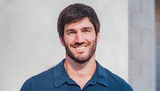
Rob English is a hair loss expert, published researcher, and consumer & patient advocate. He sits on the editorial board of a top dermatology journal and runs one of the world's largest hair loss communities, where his specialty is spotting the flaws in clinical trials that hide what treatments really do. After a decade of calling out what doesn't work, he co-founded the company behind this serum to give men an evidence-first, prescription-free option.

